Buyer Condo Inspection
Understand the visible condition of the unit before the transaction moves forward.
- ✓Accessible unit systems
- ✓Interior and balcony conditions
- ✓Repair-priority context
 T.A.P. INSPECTIONSTRUSTWORTHY • ACCURATE • PROFESSIONAL
Marco Island • Naples • Southwest Florida
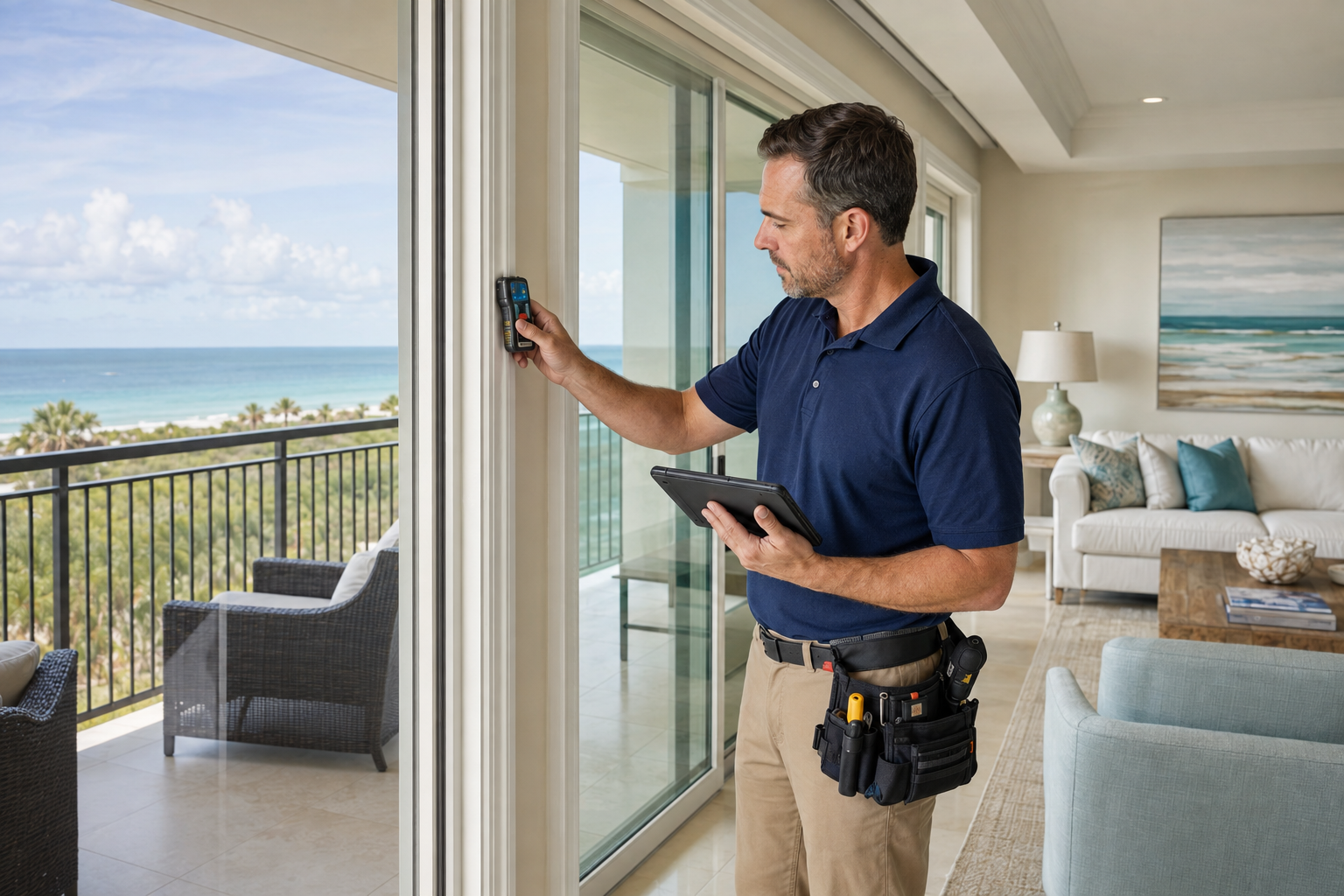
A condominium inspection is not simply a smaller home inspection. T.A.P. evaluates the accessible systems and components within the unit while helping you understand where owner responsibility may end and association responsibility may begin.
THE RIGHT SCOPE
A unit inspection does not automatically include common roofs, structural systems, elevators, fire-protection systems, shared mechanical equipment, seawalls, or other association-controlled components. Those require separate access, authorization, and scope.
Understand the visible condition of the unit before the transaction moves forward.
Evaluate visible workmanship and installed components after substantial unit updates.
Document current conditions and identify visible concerns before they become larger problems.
THE T.A.P. DIFFERENCE
Condominium ownership involves private components, shared systems, association responsibilities, and building records. T.A.P. keeps the physical inspection focused on the accessible unit while clearly identifying observations that may require association documents, building management, or a separate professional scope.
WHAT’S INCLUDED
Clear observations, supporting photographs, and useful context help turn technical property conditions into information you can act on.
Accessible walls, ceilings, floors, doors, windows, sliding-glass doors, installed cabinetry, finishes, and representative appliances.
Accessible cooling equipment, thermostat operation, distribution conditions, filters, and visible condensate-management components serving the unit.
Accessible fixtures, supply and drain components, water-heating equipment, functional flow, and visible evidence of active or prior leakage.
The unit panel, representative outlets and switches, GFCI protection, accessible devices, and visible electrical concerns.
Accessible unit balconies, railings, openings, staining, odors, humidity concerns, and visible interfaces that may warrant further evaluation.
An organized, mobile-friendly report separates unit findings from observations that may involve common elements or association-controlled components.
WHAT TO EXPECT
From scheduling through delivery, the process stays focused on the property and the information you need.
Provide the address, unit number, building type, known concerns, renovation history, and any access requirements.
We methodically evaluate the agreed unit scope and document material observations with supporting photographs.
Receive a clear digital report with follow-up support and context for items that may involve the association or another specialist.
WHEN TO SCHEDULE
A condo-specific inspection is useful for purchases, renovated units, maintenance planning, and follow-up after leaks or repairs. Association records should be reviewed separately because important building-level conditions may not be visible from inside the unit.
Discuss the property with T.A.P. →COMMON QUESTIONS
No. A standard condo inspection focuses on visible and accessible components serving or located within the unit. Common roofs, structural systems, elevators, fire systems, shared equipment, and other association-controlled components generally require separate authorization and scope.
Accessible unit balcony surfaces, railings, doors, windows, and visible interfaces can be observed. Concealed waterproofing, structural engineering, exterior access, and association-controlled components are outside a standard unit inspection unless specifically included.
Yes. Renovations can conceal incomplete work, plumbing or electrical concerns, drainage problems, and installation defects that may not be apparent during a showing.
Yes, when coordinated in advance. A Florida Licensed Mold Assessor can perform a separate mold assessment when there is visible suspect growth, odor, staining, leak history, elevated humidity, or another moisture concern.
Yes. Meeting minutes, milestone or structural reports, reserve information, insurance records, water-intrusion history, and planned projects can reveal building-level matters that a unit inspection cannot determine.
They can often be coordinated when requested. Eligibility and report scope depend on the unit, building access, available documentation, and the insurance carrier's requirements.
MARCO ISLAND • NAPLES • FORT MYERS
Choose a convenient time online or call T.A.P. Inspections directly.